Last updated November 23, 2026
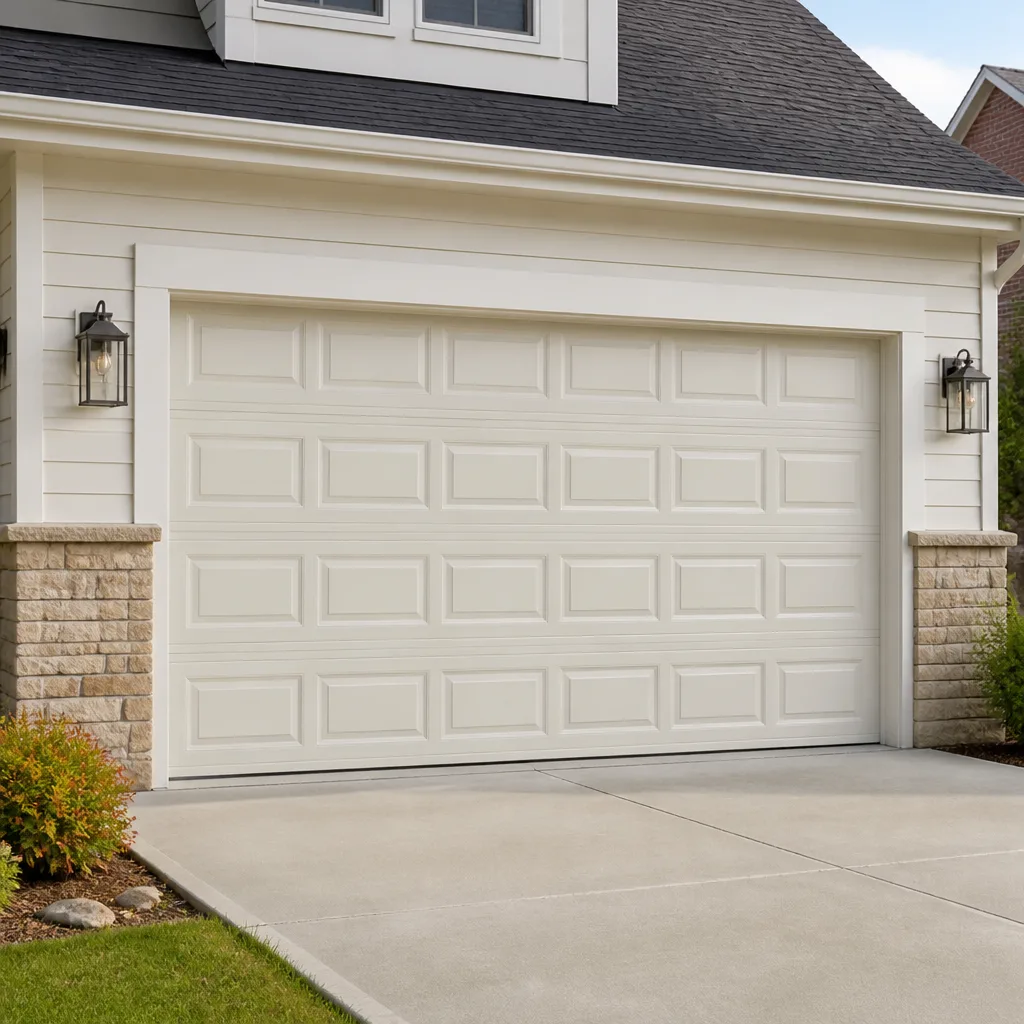 Raised-panel steel
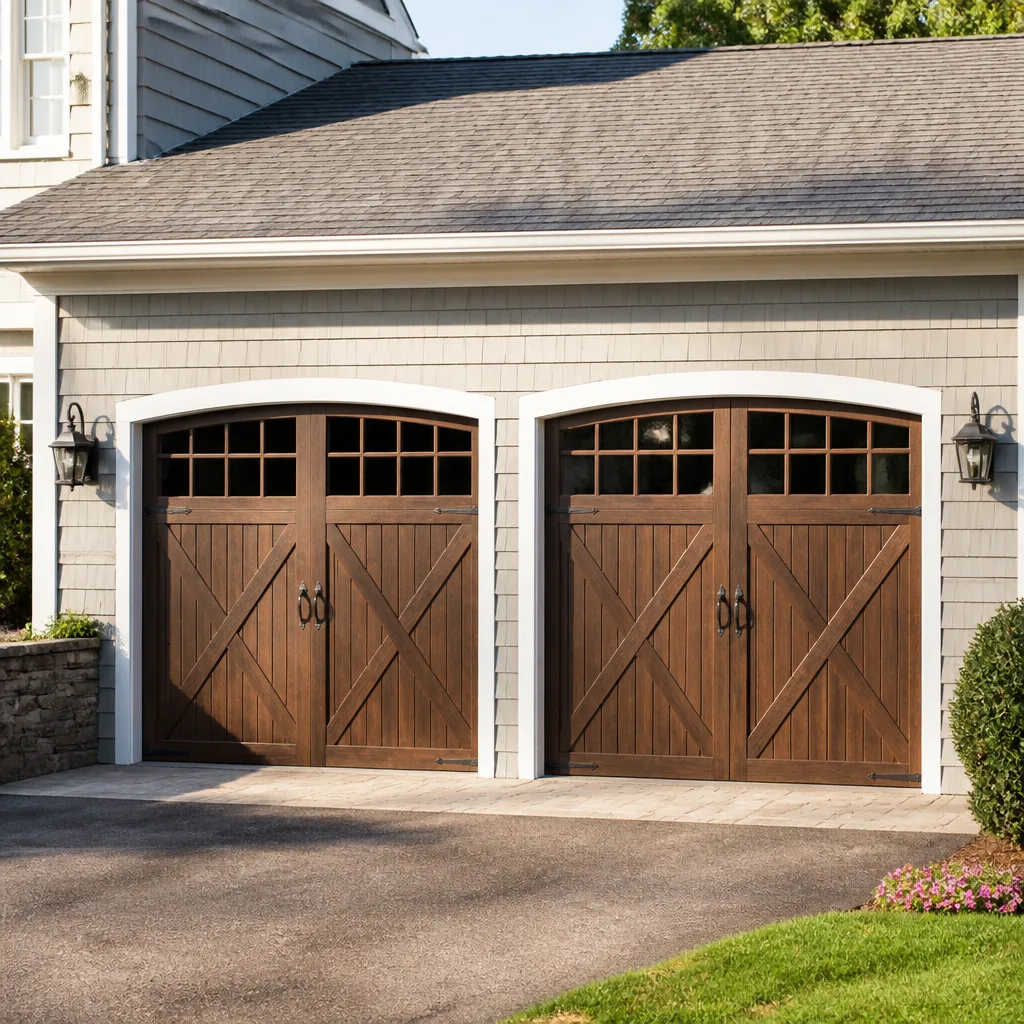 Carriage house
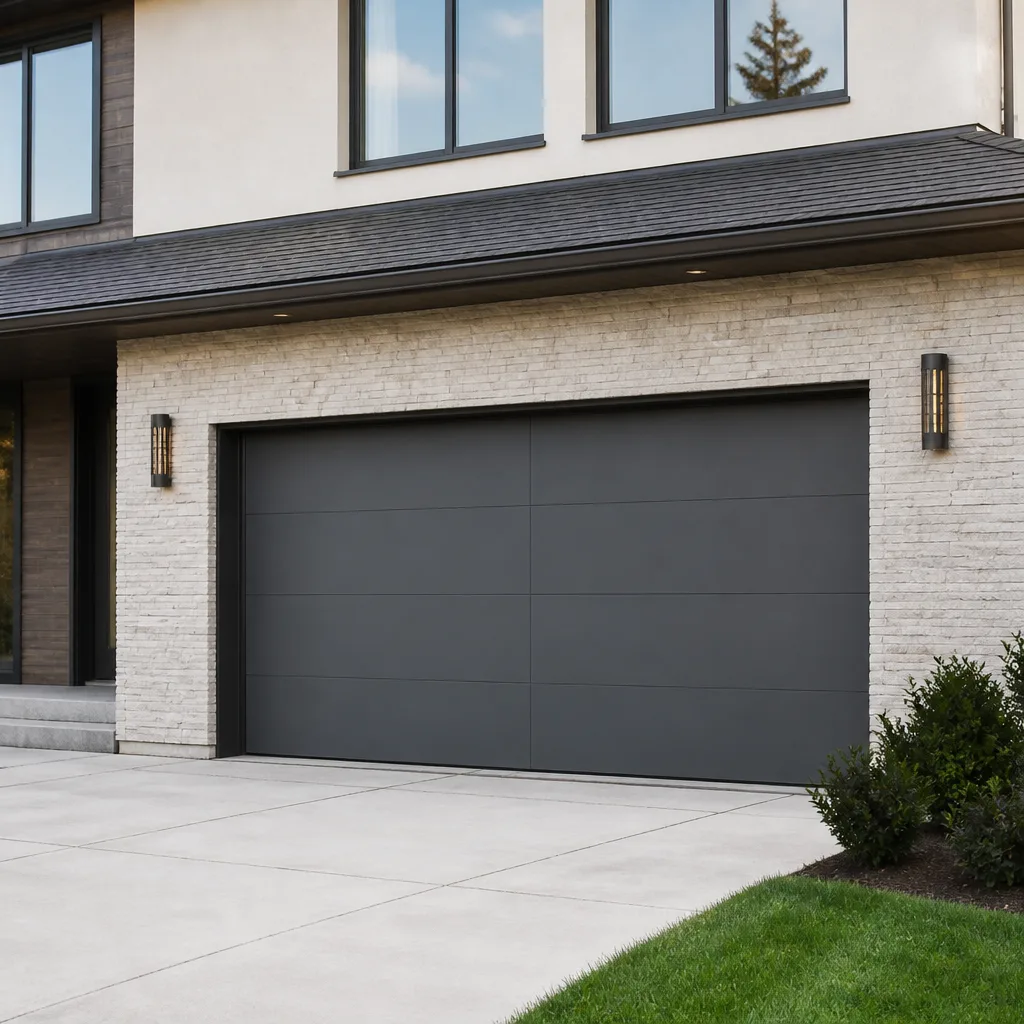 Modern flush
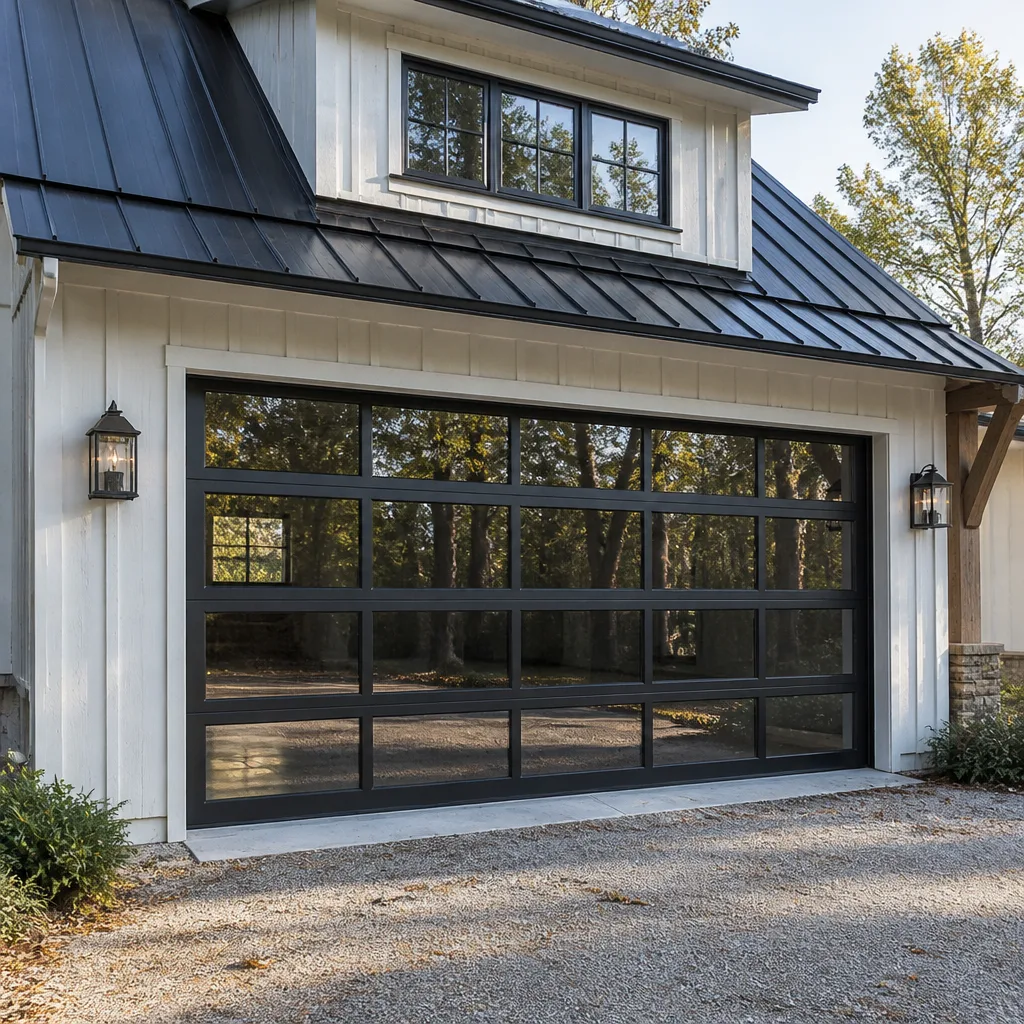 Full-view glass
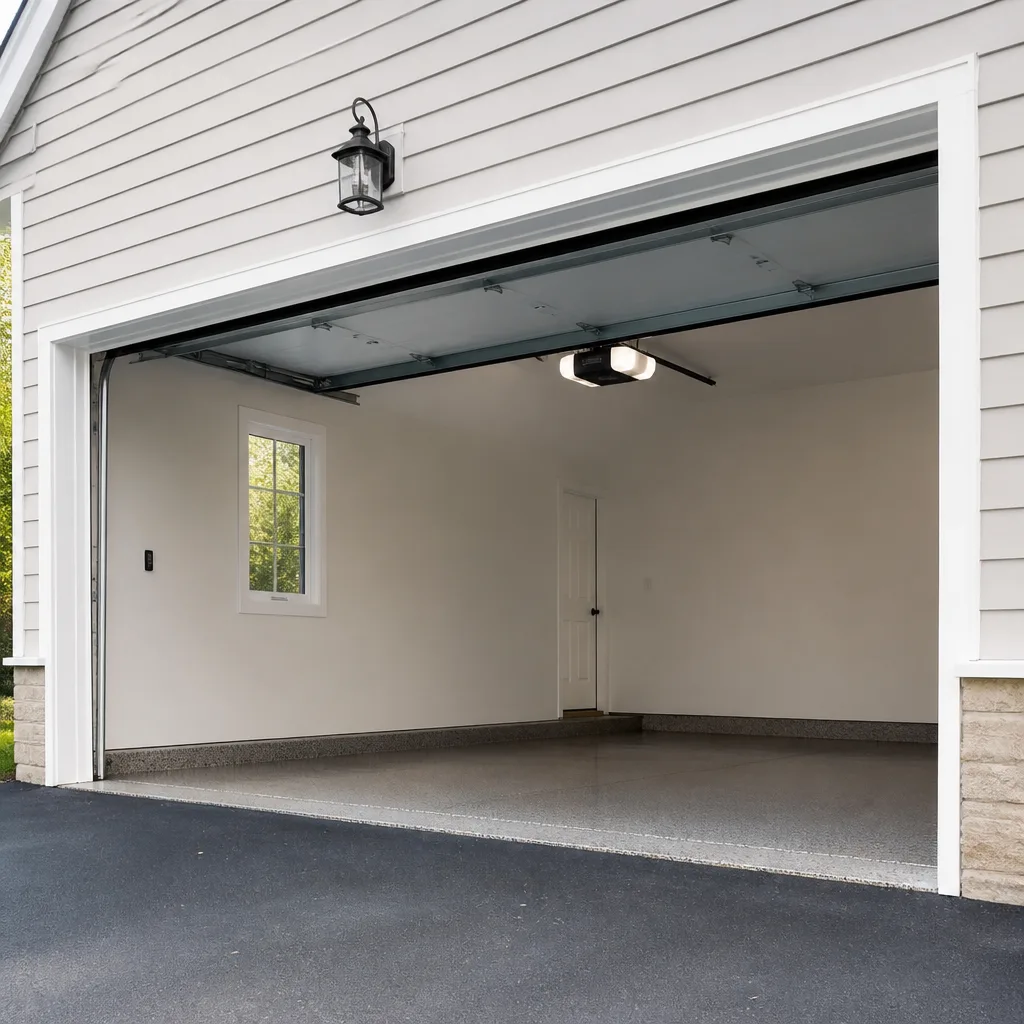 LiftMaster openers
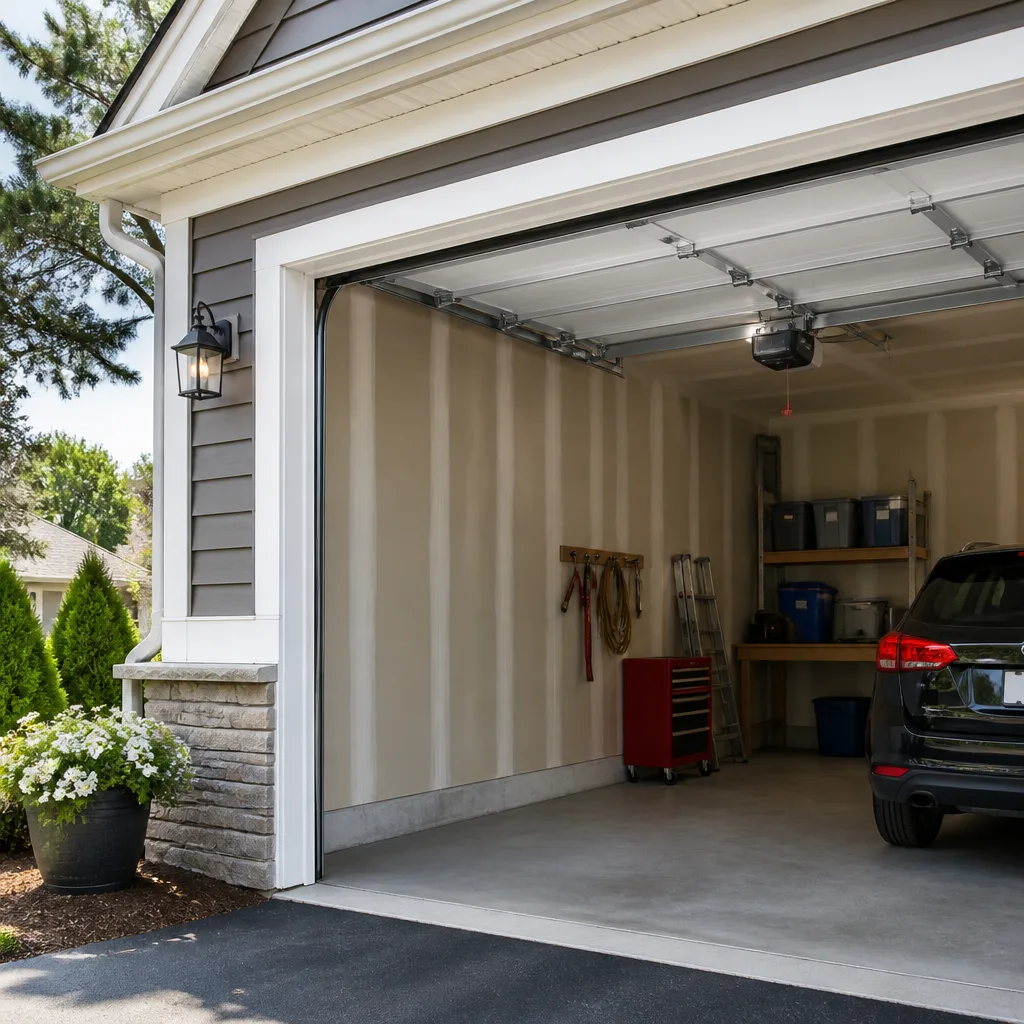 Chamberlain openers
Full 25-point door and opener safety check with every visit - springs, cables, rollers, tracks, and your LiftMaster or Chamberlain opener included
You get a price before we start. It does not change when the pro arrives.
Get your free estimateGarage Door Warning Signs: An Oakville Homeowner’s Reference Guide
A garage door that reverses before touching the ground is not malfunctioning. It’s doing exactly what a correctly calibrated safety system is supposed to do. The homeowners who disable that reversal feature to “fix” the problem are the ones who end up with crushed vehicles and voided warranties. That single misunderstanding sits at the heart of almost every garage door warning sign we’re asked about: some signals mean stop and call, and some mean the door is behaving perfectly. This guide sorts the symptoms into a three-tier risk system – adjust it yourself, schedule service within a week, or stop operating the door entirely – and explains the mechanical reason behind each one, so you know exactly which response fits what you’re seeing in your Oakville garage.
Quick Answer
Garage door warning signs fall into three risk tiers. Self-service signs include a reversing door, squealing rollers, and a remote that works only up close – these are calibration, lubrication, or battery issues most homeowners can address. Signs that warrant service within a week include a door that jerks on one side, a grinding opener, and a bent bottom panel. Signs that mean stop operating the door immediately are a snapped torsion spring, a detached or frayed cable, a door hanging off its track, and any door that free-falls when the opener is released. When in doubt about which tier you’re in, call a trained technician before you run the door again.
Styles & brands we work with
- Raised-panel steel
- Carriage house
- Modern flush
- Full-view glass
- LiftMaster openers
- Chamberlain openers
Table of Contents
- The Three-Tier Risk System for Garage Door Warning Signs
- Tier 1: Warning Signs You Can Address Yourself
- Tier 2: Warning Signs That Need Service Within a Week
- Tier 3: Warning Signs That Mean Stop Operating the Door
- A Frayed Cable vs. a Structurally Compromised Cable
- Warning Signs by Opener Brand: LiftMaster, Chamberlain, and Genie
- Warning Signs Homeowners Consistently Misattribute
- How Oakville Seasons Change What You Should Watch For
The Three-Tier Risk System for Garage Door Warning Signs
Every garage door symptom sits somewhere on a spectrum between cosmetic and genuinely dangerous, and the cost of confusing the two runs in both directions. Ignore a Tier 3 symptom and you risk injury or a door that drops. Treat a Tier 1 symptom as an emergency and you spend money on a service call when a $15 part and five minutes would have solved it. The tier system below is the framework we use on every diagnostic trip, and it’s the spine of this whole guide.
Here’s how the three tiers break down:
- Tier 1 – Self-service. The door is safe to operate. The fix is a calibration, a battery, a lubrication, or a small adjustment. You can handle these yourself with a basic toolkit, and the door won’t endanger anyone while you do.
- Tier 2 – Schedule service within a week. The door still functions, but something is wearing, loosening, or misaligning. Left alone, these symptoms progress toward a Tier 3 failure, often at the worst possible moment. Book a technician, but you can still use the door carefully in the meantime.
- Tier 3 – Stop operating immediately. A structural component has failed or is about to. Running the door can cause the whole panel assembly to drop, snap a cable under tension, or damage the opener beyond repair. Park outside, leave the door down if it’s already down, and call for emergency service.
One more thing to fix in your mind before you read on: a garage door is a balanced system, not a motorized panel. The springs carry the door’s weight; the opener only provides the push and pull to move a weight it can’t lift alone. Most Tier 3 failures trace back to a spring or cable that stopped doing its job, which is why garage door spring repair is treated as its own discipline rather than a generic repair. The opener then strains to compensate, and the damage spreads. Recognizing which tier you’re in before that happens is the whole point of this reference.
Tier 1: Warning Signs You Can Address Yourself
These are the symptoms where the door is telling you something real, but the response is calibration or maintenance rather than a technician. They’re worth knowing because fixing them early keeps them from sliding into Tier 2.
The door reverses before it touches the ground. This is the safety reversal system doing its job. Garage doors have a photo-eye sensor at the bottom corners and, on most units, a pressure-sensing feature in the opener. If the door hits or senses an obstruction on the way down, it reverses. The fix is almost always to clear whatever is blocking the beam – a leaf, a spider web across the lens, a box left in the path – or to realign the sensors so their lenses point directly at each other. A small LED on each sensor tells you whether it sees the other one. If you’ve cleaned and aligned the eyes and the door still reverses, that moves to a service call; don’t disable the reversal feature to make it stop.
Squealing or grinding rollers. Rollers run on a track and pivot in hinges, and they dry out. A spray of a garage-door-rated lubricant on the roller bearings, hinges, and the torsion bar (not the track, and not the springs under tension) quiets most squeals in minutes. If the noise is a hard metal-on-metal grind and the door shudders as it moves, that’s Tier 2.
The remote only works when you’re close. Almost always a remote battery or a dirty antenna wire on the opener head. Replace the battery first. If the opener uses a wire antenna hanging from the back panel, make sure it’s not touching metal framing.
The door doesn’t open all the way but the motor runs. Check the travel limit settings on the opener and the obstruction sensors. If the opener is a modern LiftMaster or Chamberlain, the up and down limits are adjusted with set buttons on the motor head. If you’re not comfortable adjusting them, a service call is cheap compared to a damaged panel.
One light on the opener flickers or blinks in a pattern. Most modern openers use a diagnostic blink code to tell you what they think is wrong. Check your owner’s manual or the brand’s support page. A LiftMaster or Chamberlain wall console that shows a specific number of flashes is reporting a specific fault. If you can’t find the code, note the blink pattern and describe it when you call.
Tier 2: Warning Signs That Need Service Within a Week
These symptoms mean a component is genuinely wearing out or misaligned, and the door is still working but getting worse. The right response is book a technician within the week and use the door carefully until then. Don’t wait for the symptom to become a failure.
The door jerks or binds on one side. A door that rises smoothly on one side and lurches on the other usually has a track that’s been knocked out of plumb, a roller that’s come out of the track and is riding the flange, or a cable that’s jumped a drum. Each of these puts uneven load across the panels. Left alone, it cracks hinges and bends panels. In Oakville, where plenty of homes sit on driveways with a slope or a pavers apron, the bottom of the track takes more of a beating than the top, and one side sags before the other.
A hard grinding noise from the opener, not the door. The opener’s gear and sprocket assembly wears over time – especially on older chain-drive units – and the grinding is the sound of a worn gear slipping. This is repairable, and it’s worth mentioning which brand of opener you have when you call: garage door opener repair is a different job on a Genie screw-drive than on a LiftMaster belt-drive, and the parts don’t cross over.
The bottom rubber seal is split, torn, or missing. The section is cosmetic to the door’s balance but functional to the house: it keeps out drafts, insects, and water where the slab meets the door. In a Missouri climate with cold winters and humid summers, a dried-out bottom seal can let in enough water to warp the lowest panel. Replacing the seal is a low-cost service call and prevents a much larger repair.
A bent bottom panel or a dented section. A small dent in a panel weakens the panel’s structure and, eventually, its ability to hold its shape as it travels up the track. A bent bottom panel often rubs the seal and creates a new source of resistance. If the door is a Clopay, an Amarr, or a Wayne Dalton, the replacement panel has to match the original profile. That’s a brand-sourcing conversation, not a generic parts-counter order.
The opener fails intermittently. It works one day and not the next. This usually points to a worn capacitor, a failing circuit board, or a loose splice in the low-voltage wire to the wall button. Describing when it fails – cold mornings, after a power flicker, only from the remote, only from the wall button – will point a technician at the right component before the visit.
A new gap between the door and the frame. The door used to close flush and now there’s light around one corner. That’s a hinge or a track that’s shifted. It can also mean the spring has lost some of its tension and the door isn’t sitting as squarely as it once did – a component-level warning worth a diagnostic.
Tier 3: Warning Signs That Mean Stop Operating the Door
This tier is where serious injury happens, and it’s the tier garage door homeowners most often misdiagnose as “just a weird noise.” If any of the following describes your door, stop running it and call for emergency service. The best-case scenario if you keep operating a Tier 3 door is a door that won’t open; the worst case involves high-tension springs and cables snapping with enough force to cause serious injury.
- A snapping sound followed by a door that won’t lift. That snap was your torsion spring breaking. The door’s full weight is now unsupported by the spring, and the opener is straining to lift a door it was never designed to lift. Don’t keep cycling the opener; you’ll burn it out and could pull the door off the track.
- A visible gap or broken loop in a cable. The lift cable runs from the bottom corner of the door up and over a drum at the top of the shaft. These cables carry hundreds of pounds of tension. If you see a single broken strand on the cable, one end that’s come loose from its drum, or a cable hanging slack with no tension, stop. A cable is not something to inspect close-up or handle. Its failure mode is sudden and violent.
- The door is hanging off the track. A roller has jumped the track, or the track itself has separated from the jamb. Never operate a door that’s off its track – it can pivot and drop on the person or car underneath it.
- The door free-falls when you pull the manual release. The manual release should let you lift the door by hand with moderate force. If the door drops on release, the spring balance has failed and the door is unsecured. Don’t stand under it.
- A grinding noise plus a visible crack in the torsion shaft or an end plate pulling away from the wall. Structural failure at the mounting points puts the entire shaft assembly under uneven load. Don’t run the door.
The safety caveat that applies to all of these: do not attempt to adjust, grease, tighten, or “help” any spring or cable under tension yourself. Garage door springs are wound to hundreds of pounds of force, and the tools a technician uses to wind and unwind them are specific to the job and the torsion or extension system. This isn’t the component to learn on. If you’re unsure of what you’re seeing, call for a diagnostic and describe exactly what you observe.
Emergency garage door service exists for precisely these situations: a door that won’t open with a car trapped inside, a broken spring that’s left the door down with the house unsecured, a business whose storefront door is jammed at opening time. In Oakville, that call is worth making before you try the opener one more time.
A Frayed Cable vs. a Structurally Compromised Cable
The visual difference between a cable that looks worn and one that has actually lost structural integrity matters more than almost any other warning sign call on this list – and it’s a distinction most advice skips.
A frayed cable shows a broken strand or two near the drum or at the looped end at the bottom bracket, and the remaining strands are intact and tight. The cable is still under load and doing its job, but it’s on its way out. That’s Tier 2. It needs to be replaced soon, and the door should not be pushed hard in the meantime. A small amount of surface rust on the cable itself isn’t a structural signal; the load-bearing strands are galvanized and the rust is on the outside of the wrap.
A structurally compromised cable shows one of the following: an end fitting that’s pulled out of its loop, a cable that’s humped or birdcaged along its length (damaged from a roller that jumped and ran on it), a cable that’s wound unevenly across its drum in a way that will overlap and crush the strands on the next few cycles, or a visible break in more than one strand near the same point. Those are Tier 3 signals. The cable is carrying less load than the door needs and is at high risk of a sudden failure. Don’t run the door.
Either way, this is not a component to inspect by hand with the door in a halfway position or with the opener disengaged. A cable under tension can move without warning. The right response to any cable doubt is to leave the door alone and get a trained technician to look at it – replacing a cable is one thing; replacing the door hardware behind a snapped cable that’s already caused damage is a very different job. When a cable or spring is the suspected fault, the call is for a diagnostic and for garage door repair that covers the full assembly, not just one part.
Warning Signs by Opener Brand: LiftMaster, Chamberlain, and Genie
Garage door openers are not interchangeable diagnostic boxes. The same “it just stopped working” complaint has a different most-likely cause depending on the brand and the drive type. Knowing the brand already in your garage – and telling us when you call – saves diagnostic time on the visit. Our technicians work on LiftMaster, Chamberlain, Genie, Clopay, Amarr, Wayne Dalton, Craftsman, and Raynor on a routine basis, and the brand-specific tells below come out of that experience.
LiftMaster and Chamberlain. These two share a lot of internal architecture – both are Chamberlain Group brands – so the warning signs line up. A wall console that blinks a fixed number of times before pausing is delivering a fault code; count the flashes and describe the pattern. The safety reverse sensors on these units have diagnostic LEDs that flash when the beam is broken or misaligned. A door that reverses before the bottom on a LiftMaster is very often a sun-glare issue on the sensor lenses, not a bad sensor. And a chain-drive LiftMaster or Chamberlain with a hard grinding noise is most often the gear and sprocket assembly wearing, a repair that’s done often enough that it’s routine.
Genie. Genie openers run on chain, belt, or screw drive, and the screw drive is the one to know. Genie screw-drive units are quieter than chain-drive but develop a distinctive rattle or squeal when the screw needs lubrication, which is a routine maintenance item specific to that drive type. Genie units also use a different remote frequency and rolling-code protocol than Chamberlain Group brands, which is why remotes from one don’t work with the other – if your remotes have stopped linking after a power event, the frequency and re-link procedure differ by brand, and it’s worth confirming before you buy a new remote.
Craftsman. Craftsman openers (many of them built by Chamberlain Group) follow much of the same signaling logic as LiftMaster and Chamberlain, but with older model generations you’ll sometimes find remotes or wall consoles out of production. That’s a replacement-parts question before it’s a repair question.
Smartphone-control faults. If your opener is connected to a smartphone app and the app reports “door not closed” when the door is clearly closed, the tilt sensor or the app’s limit calibration is off – not the door itself. That’s a Tier 2 calibration issue, not a Tier 3 failure.
The point of all this: when you call for a diagnostic, tell us the brand and model if you can find it (it’s usually a label on the opener head or the inside of the wall console). garage door repair Oakville technicians can bring the right diagnostic approach for the equipment you actually have, which is faster than a “we’ll take a look and see” visit.
Warning Signs Homeowners Consistently Misattribute
Some symptoms get blamed on the wrong component almost every time. In our experience, the ones below send homeowners toward the wrong fix more often than any other.
“The remote works sometimes” – and it’s rarely the remote. This is the single most misdiagnosed symptom we see. The remote is usually fine. The real causes, in rough order of frequency: a failing opener circuit board that’s becoming heat-sensitive or power-sensitive, a loose or corroded antenna wire on the opener head, a low-voltage wire splice at the wall button that’s intermittent, a neighbor’s garage door opener on the same legacy frequency (less common with modern rolling-code units but very real on older ones), or interference from an LED or a smart-home device near the opener. Replacing the remote first is the most common wasted trip to the store.
“The opener is too weak to lift the door.” When a door struggles to lift, the opener is usually fine – the spring is losing tension. A torsion spring that’s a couple of winds light will cause the door to feel heavy and the opener to work harder and eventually skip or overheat. The symptom looks like an opener failure; the cause is a spring adjustment.
“The door is off the track because the track is loose.” Reverse this. The track usually gets pushed out of alignment because a roller is bad, a cable is slack, or a panel is bent and pushed the track on the way up. Retightening the track without addressing the roller or cable will get you a fresh alignment that’s out again within a week.
“The sensors are bad.” Garage door safety sensors are among the most reliable components on the system. When they “fail,” it’s almost always the alignment, a dirty lens, a broken wire, or an LED indicator light from a nearby fixture confusing the receiver. The sensors themselves are rarely the fault.
“A noisy door is just an old door.” There’s no such thing as a door that’s supposed to be noisy. A door that’s rattled quietly for a year and is now louder is telling you a roller, hinge, or spring has changed state. The noise is the warning sign; the noise isn’t the problem.
How Oakville Seasons Change What You Should Watch For
Garage doors sit on the boundary between an unconditioned garage and the outdoor climate, and in the Oakville area – with cold winters, humid summers, and a spring and fall that swing through big temperature changes – some warning signs follow the seasons. Knowing which symptoms to expect when makes it easier to tell a seasonal nuisance from a genuine failure.
Late fall and early winter. The first hard cold snap is when a torsion spring that was already weakened gives up. Cold makes steel less ductile, and a spring that took the door up all summer is suddenly asked to do it in single-digit weather. A door that’s slow or skips on the first cold morning of the year is worth a spring check before it breaks. Bottom seals also harden with cold and lose their seal, which is worth catching before the deep freeze.
Late winter and early spring. Freeze-thaw cycles at the bottom of the driveway shift the ground under the track, and the track goes slightly out of plumb. That’s when “the door leans a little” complaints show up – a Tier 2 symptom, and one that gets worse the longer it sits. This is also when the grit and salt from winter roads works into rollers and hinges and turns a quiet door noisy.
Summer. Humidity swells wooden panels and can cause a door to bind where it didn’t in winter. The biggest summer issue, though, is sensor glare: low morning or evening sun shining directly into the photo-eye lens will cause a door to reverse before it closes, even though nothing’s wrong with the sensor. That’s a Tier 1 adjustment – usually a small hood or a re-aim of the sensor.
Storm season. Oakville and the surrounding area get strong summer storms. A power surge is the most common cause of opener circuit-board failures, and a power flicker is the most common cause of an opener that stops responding or a wall console that needs to be re-synced. If your opener stops working immediately after a storm, see whether it will respond to the wall button before you conclude anything worse.
None of these seasonal symptoms are dangerous on their own. They’re exactly what a reference guide is for: the point is to notice them at the nuisance stage and get them looked at before they cross into Tier 3.
Common Mistakes to Avoid
- Disabling the safety reverse feature because the door keeps reversing. The reverse is a feature working correctly. Disabling it to stop the annoyance is how doors crush things underneath them. If the reverse is triggering for a real reason you can’t find, call and have it diagnosed.
- Greasing the tracks to stop a squeak. Track lubrication attracts grit and dust, and the roller bearings need the grease, not the track. On an Oakville door that sees winter road grit, greasing the track turns one squeak into a stuck door.
- Pulling the manual release on a door that’s already in a bad state. If the spring is broken, pulling the release lets the full weight of the door drop suddenly. The release is for power outages with a healthy door, not for diagnosis.
- Cutting a hanging cable or spring yourself. A spring under tension releases all at once when the wrong thing is cut. Garage door springs are the single most dangerous component in the system, and the tooling and protocol to release them safely are not household items.
- Replacing the remote first when the door “works sometimes.” This is the most common wasted trip in garage door repair. Check the opener’s circuit board, antenna, and wall-button wiring before you buy a remote – or have it diagnosed.
- Buying a replacement opener off the shelf before diagnosing the door. A new opener won’t fix a door with a slack spring or a bad roller. Brand and drive type matter, and so does the door’s balance. Match the opener to the door, not the other way around.
- Waiting for a “more serious” sign before calling about a Tier 2 symptom. A door that jerks on one side doesn’t usually snap – it usually bends a panel or cracks a hinge first. Catch it at the bend-it-worse stage, not the drop-off-the-track stage.
- Hiring the first quote that matches your symptom without asking about the brand. A technician who doesn’t ask what opener you have and hasn’t worked on LiftMaster, Chamberlain, or Genie equipment is guessing. Brand familiarity is what turns a diagnostic visit into a one-visit repair.
See the difference
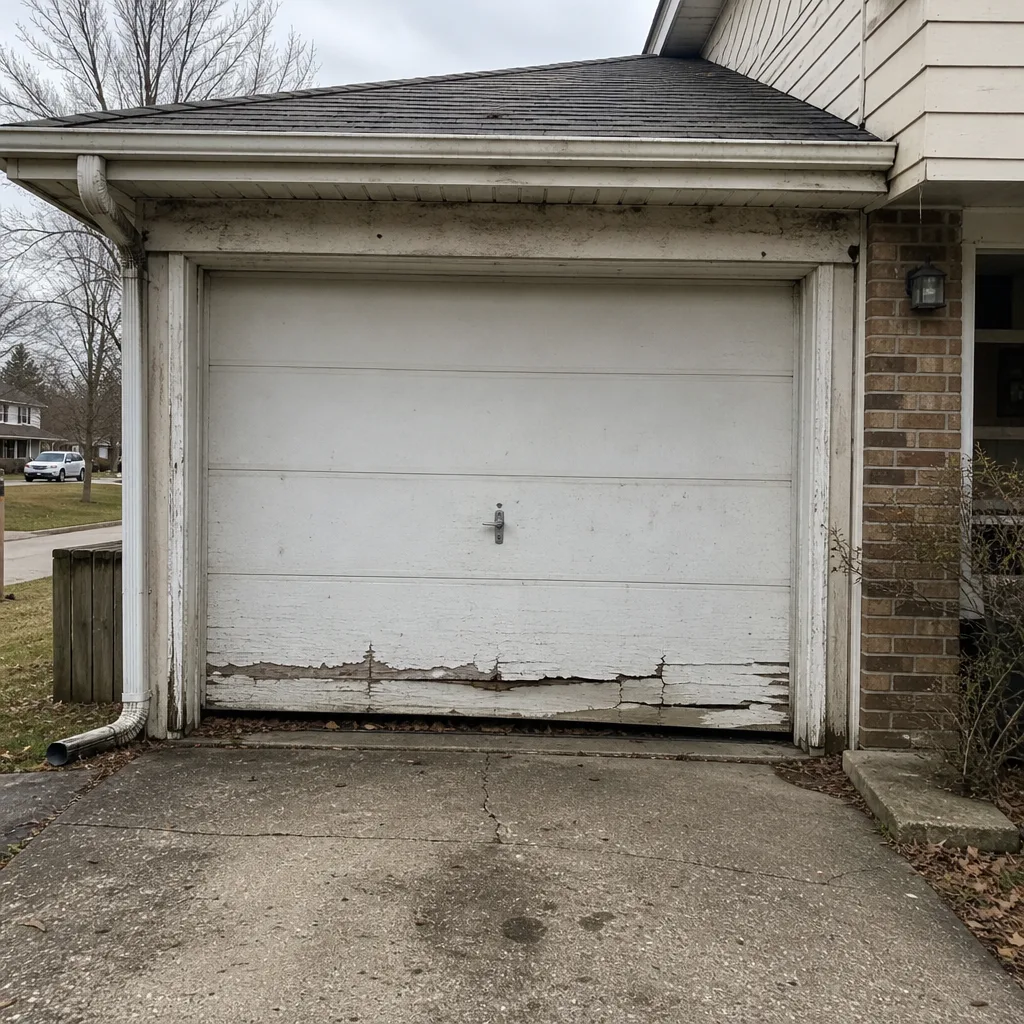 Before
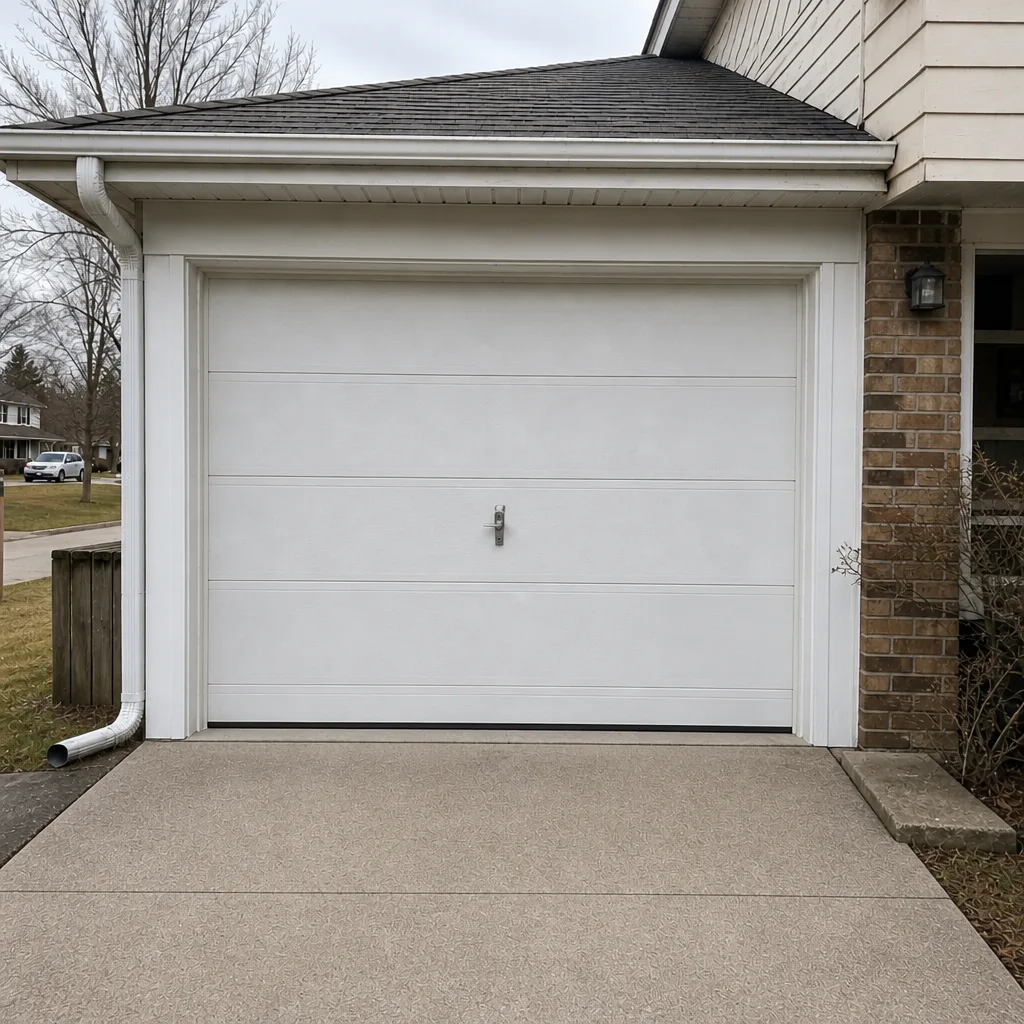 After
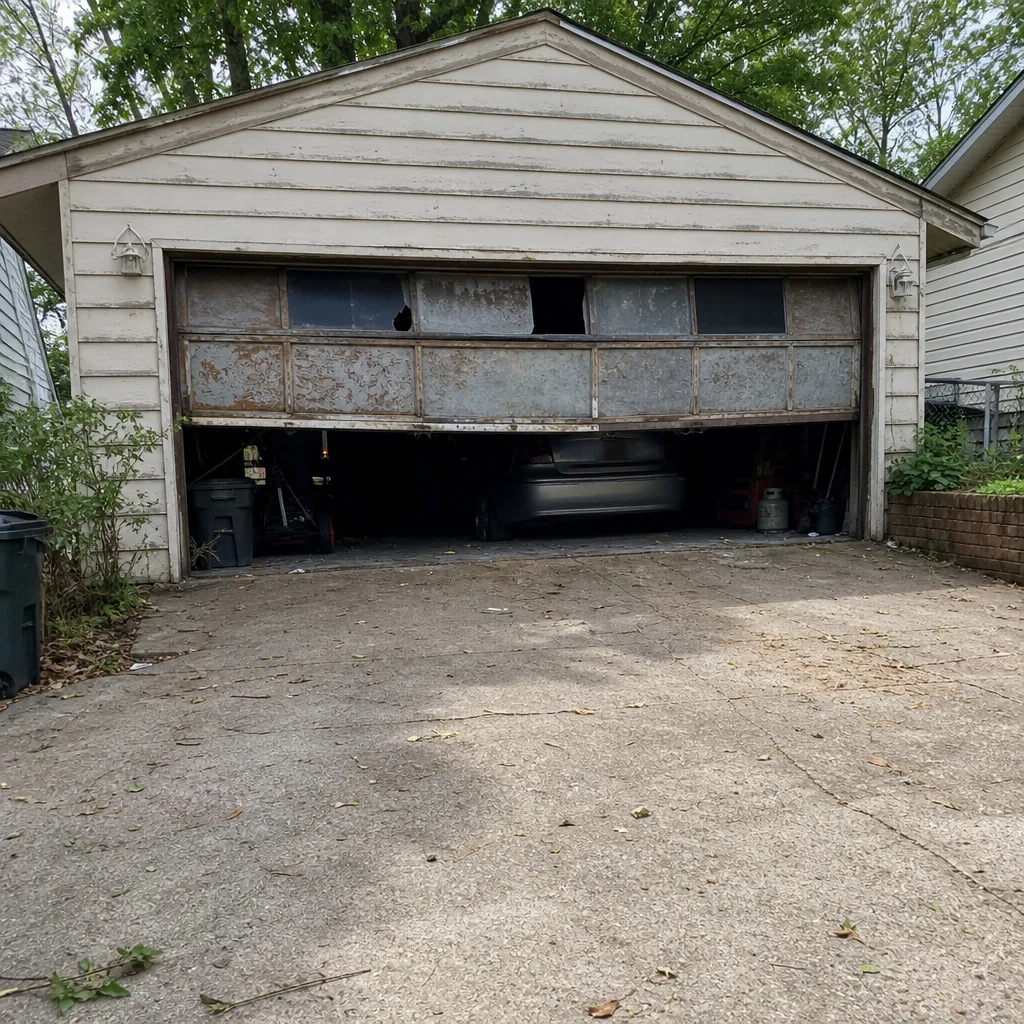 Before
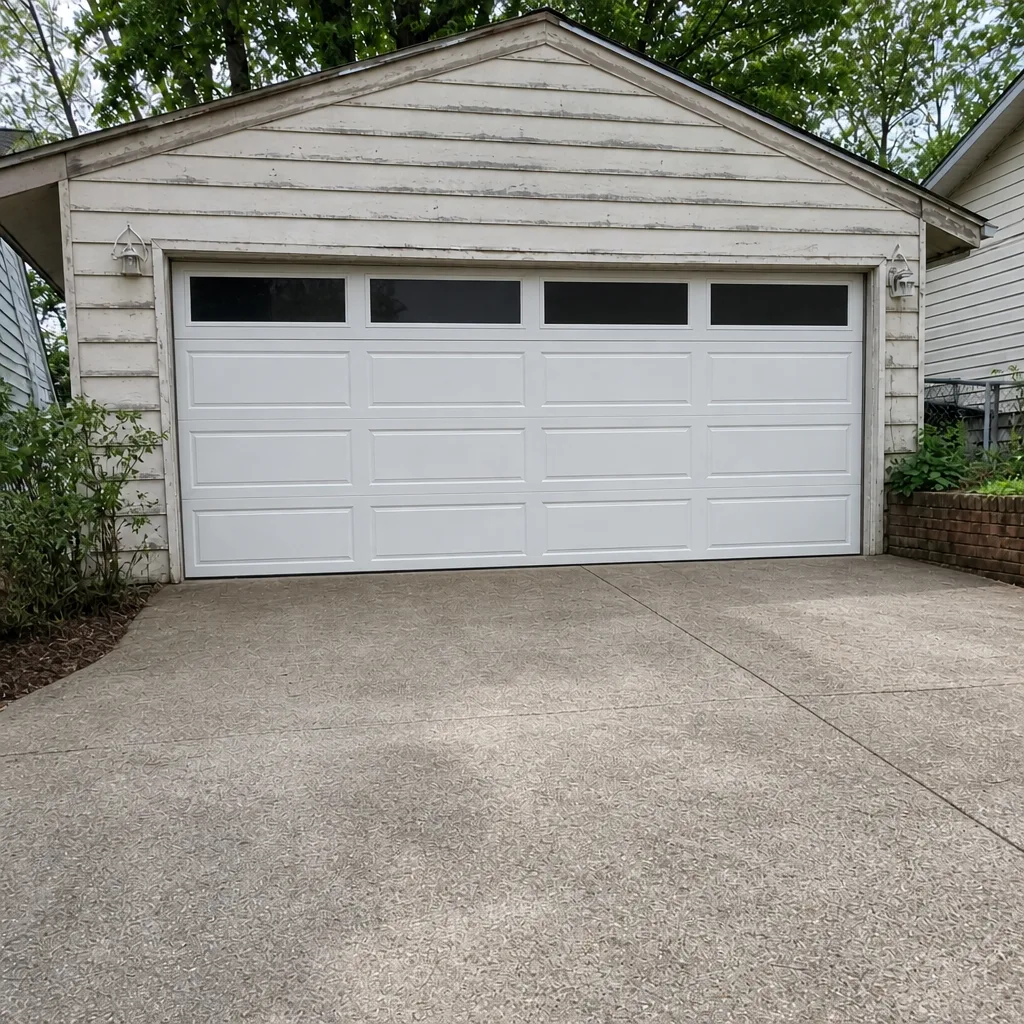 After
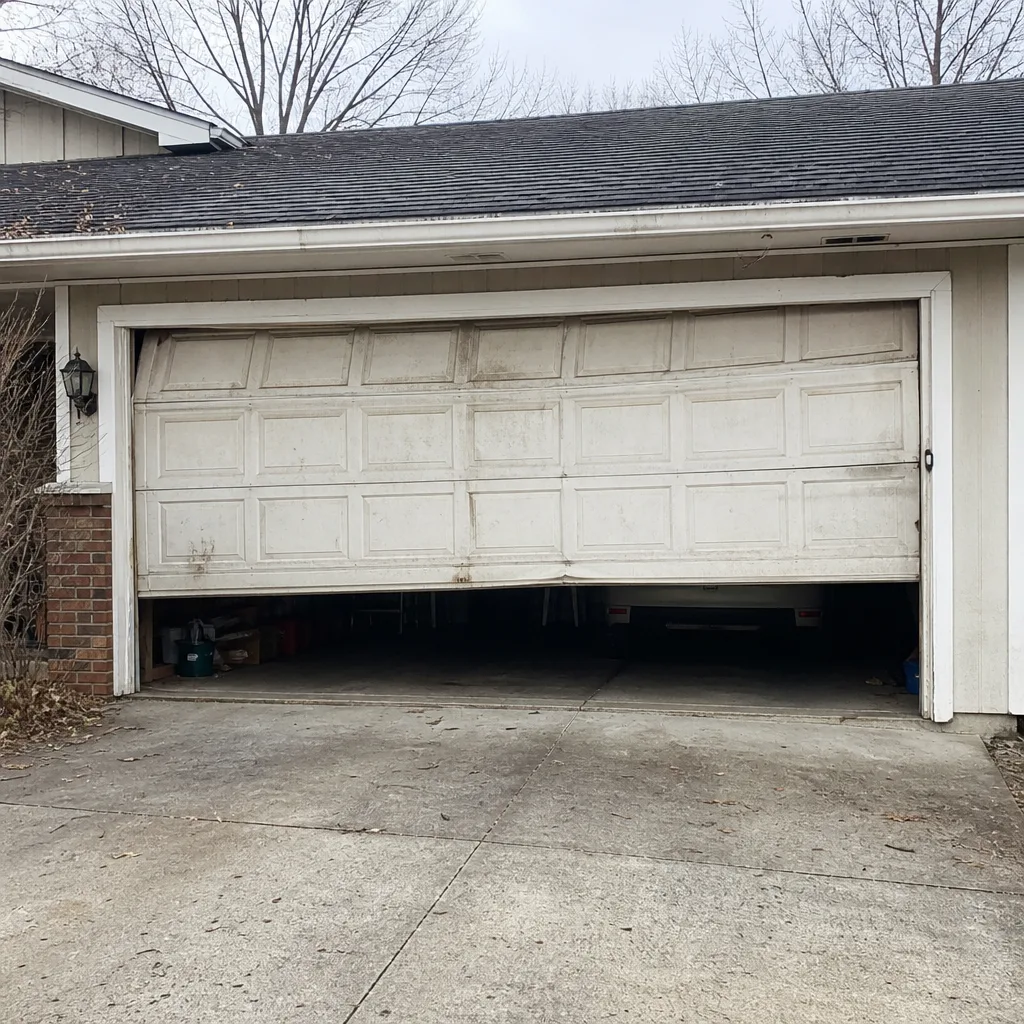 Before
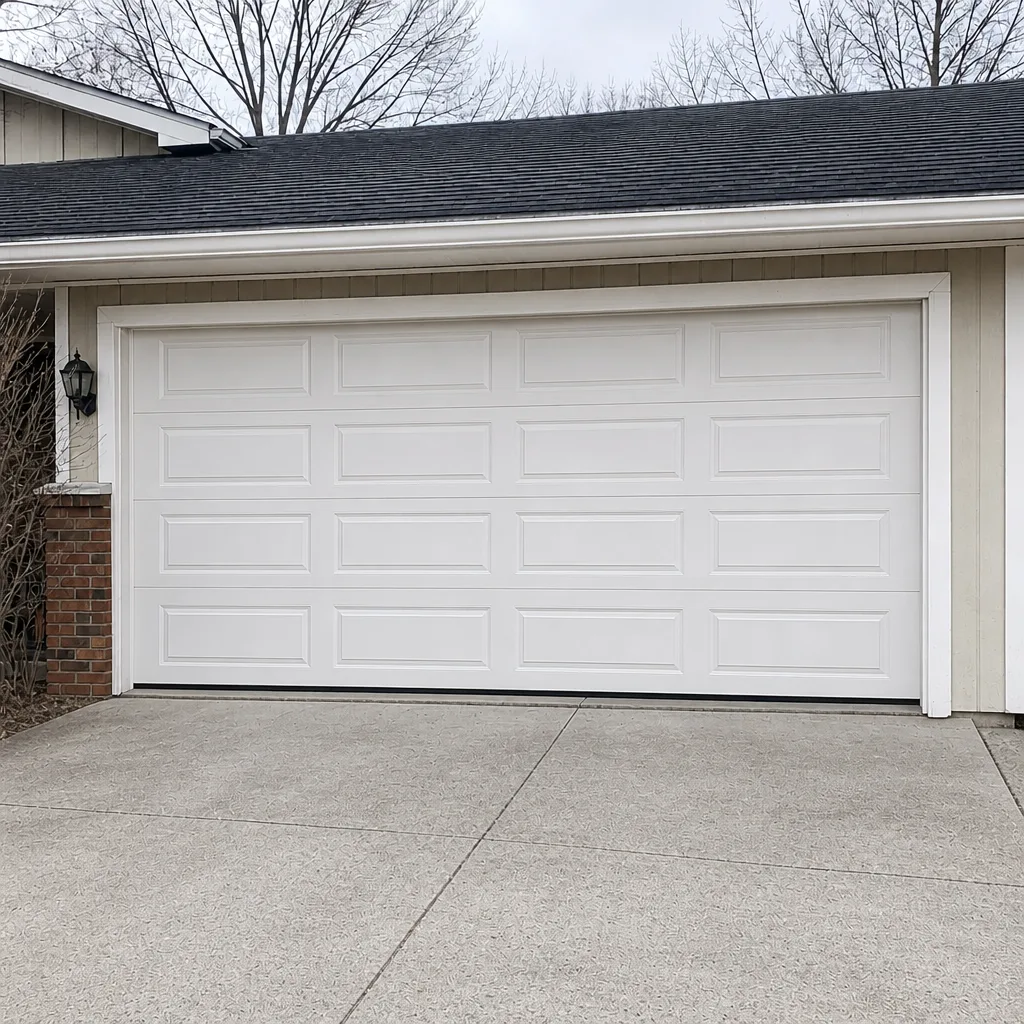 After
When to Call a Professional
Call for a diagnostic if the symptom is Tier 2 and you can’t tell whether it’s progressing or stable – particularly a door that jerks on one side, a bent bottom panel, or an opener that fails intermittently. Call for immediate help if anything on the Tier 3 list is present: a snapped spring, a slack or broken cable, a door off its track, or a door that won’t stay in place on manual release. If a door has trapped a car, blocked the exit to the house, or left the house open to the street, it’s an emergency and treating it as one is the correct call. Garage Door Repair Oakville offers free estimates in Oakville for anything you’d like diagnosed – call (877) 792-7376 and describe what you’re seeing; our technicians have up to 8 years of experience and work on the brand already in your garage.
Frequently Asked Questions
A snapped torsion spring, a broken or slack lift cable, a door hanging off its track, and a door that free-falls on manual release are the four most serious. Any of these means stop operating the door and call for emergency service – none of them is a self-fix. A single broken strand on a cable with the rest intact is a Tier 2 sign that needs a technician within the week, not an emergency, but the door shouldn’t be run hard in the meantime. Call (877) 792-7376 if you’re unsure which tier you’re in.
Because the safety reversal system is detecting an obstruction – the photo-eye sensor at the bottom corners or the pressure sensor in the opener. The fix is usually to clear the lens, realign the sensors so they point at each other, or adjust the opener’s down limit. In Oakville, low summer sun shining directly into the sensor can cause this with nothing wrong at all. Don’t disable the feature. If cleaning and re-aiming don’t fix it, call for a diagnostic – (877) 792-7376.
Rarely. A remote that works only up close is almost always an opener-side problem: a weakening circuit board, a loose antenna wire, a bad wire splice at the wall button, or interference from an LED or smart device near the opener. Replace the battery first, then check the antenna, then get the opener diagnosed before you buy another remote. A certified technician can find the actual cause in one visit – call (877) 792-7376.
You’ll hear a loud snap from the garage and find the door won’t lift, or won’t lift without the opener straining. A torsion spring usually shows a visible gap between the two halves. Don’t run the opener to test it – a door with a broken spring has lost its balance and the opener can’t lift it safely. A trained technician can replace the spring and rebalance the door; springs are the most dangerous part of the system to handle without the right tools. Call (877) 792-7376 for a free estimate.
No. A door that’s getting louder is signaling that a roller, hinge, or spring has changed state – it isn’t “just old.” A grinding metal-on-metal noise from the opener is a worn gear, and a squeal from the door is usually dry roller bearings. Both are repairs, not replacement signals. Get the noise diagnosed before you decide on a new door; the fix is often small. Call (877) 792-7376 and describe the sound.
A frayed cable has broken a strand or two near the drum or the bottom bracket but the remaining strands are tight and the cable is still carrying load – that’s a service call within the week. A broken or structurally compromised cable has a pulled end fitting, a birdcaged section, or a visible break in multiple strands, and the door should not be operated. Either way, don’t inspect by hand. Cable work is a job for a technician. Call (877) 792-7376.
The Bottom Line
Garage door warning signs are only useful if you know which response each one calls for. The reversing door is a working safety system, not a fault – leave it alone and find what’s actually triggering it. The jerking door, the grinding opener, and the bent panel are telling you a component is wearing; book a technician within the week before they turn into something worse. The snapped spring, the broken cable, and the off-track door are telling you to stop running the door and call now. Match the tier to the symptom, don’t disable any safety feature to make a warning go away, and don’t handle anything under spring tension yourself. That’s the whole discipline. If you’d like the door diagnosed in Oakville, we’re one call away.
Call Garage Door Repair Oakville at (877) 792-7376 for a free estimate – one call covers the door, the opener, the springs, and the hardware.
Written by the team at Garage Door Repair Oakville.